Brand book · v1.0 · September 2026
Every letter has more to say. Memri helps it say it.

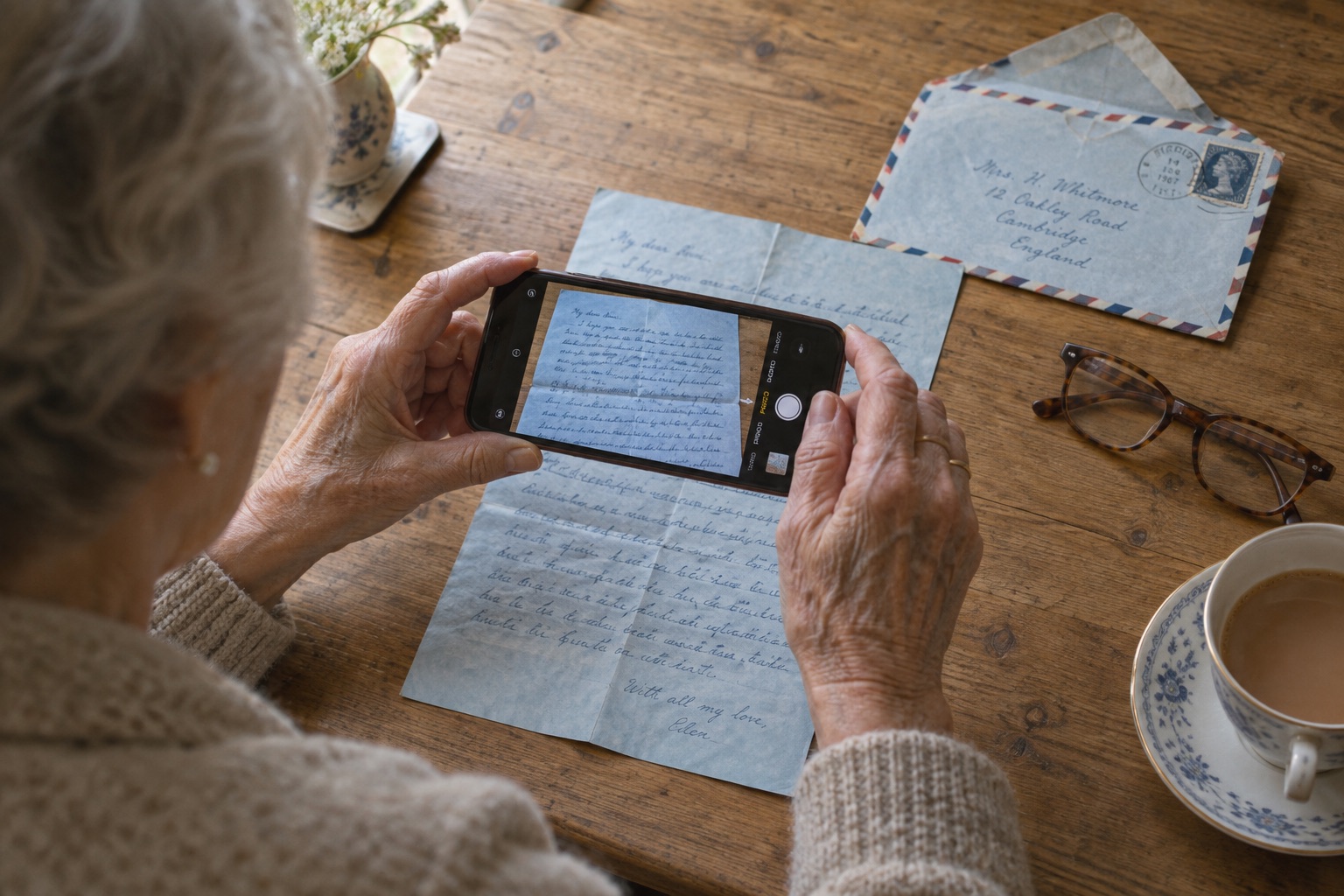
Memri asks for the story behind each photograph, one picture at a time, and learns the family's names as they're told. Then it brings the photos, letters and recipes back to the table, and keeps every word for the family who comes next.
Weekly prompts that end in a printed book. Beautiful, then finished.
Friendly, but they know nothing about the family and hold nothing for it.
A striking moment that stops there: no words, no stories, no keeping.
The photograph is the doorway; her own answers are the context. The companion knows the family. The stories are kept.
What the calm voice asks“Tell me about this one.”
People, places and days from her stories, each tied to the photo and the moment she said it. It belongs to the family, not to Memri: private, exportable, never sold or used to train models.
Point the phone at a photograph and a calm voice asks for its story, then the next. The person who was there does the talking; Memri listens, asks gently, and learns the names.
Because she told it, photographs move gently and labelled, handwriting lifts off the page and is read aloud, and a daily companion answers from her own words. It always says it is an AI.
Every story is kept in her own voice, in the family keepsake box, with a family graph of who's who that the grandchildren can open now or in forty years.
We write the way a good nurse or a favourite teacher speaks: unhurried, specific, never sugary and never clinical. We are speaking to someone who has read more letters than we have.
Kindness shows in patience and detail, not exclamation marks, puns or pet names. We never call anyone “sweetie,” and never call a person a “senior.”
Short sentences, common words, one idea per line. Adults are addressed as adults; big type is not baby talk.
Say what the product does and what it does not know. “The letter doesn't say” is a complete, honest answer.
The wordmark is hand-drawn, not typeset. Its thick verticals and hairline arches follow a broad pen held flat, the way letters were written before ballpoints. The dot of the i is a folded paper bird lifting off the page: the one moment of motion in the mark, and the whole idea of the product.


Two facets, one fold: a wing raised and a body. Used alone only where the name is already present (app icon, favicon, notification). Clear space around the wordmark equals the height of the bird on every side. Minimum size: wordmark 72 px wide on screen, 18 mm in print; mark 16 px.
✨The palette comes from the desk drawer: writing paper, blue-black ink, the royal blue of a fountain-pen cartridge, and the red of a wax seal used only for recording and irreversible actions. Every text pairing meets WCAG AAA (7:1) or AA Large; the app never uses color alone to carry meaning.
Libre Caslon speaks for the brand: bookish, contrasty, trustworthy. The app runs on Atkinson Hyperlegible Next, drawn by the Braille Institute for low-vision readers, with letters that cannot be mistaken for each other. Handwriting fonts appear only inside specimens, never as brand type.
App body · 22/32The minimum body size in Ruth's app. Nothing she must read is smaller than 18 px.App title · 34/40Good morning, Ruth.Transcript · 26/40It has rained since Tuesday.Family app body · 17/26The family dashboard is denser, like any settings app, but never below 15 px.A 24-unit grid, 1.75 stroke, round ends, no fills. Icons are always paired with a word in Ruth's app; alone only in the family dashboard's toolbars. Objects are real and old-fashioned where possible: an envelope, a box with a lid, a pen.
Documentary, not advertising. We photograph the objects people keep and the hands that keep them, in the rooms where they live. Window light, film grain, cardigans and cold tea. No one poses, and no one is sad for the camera.
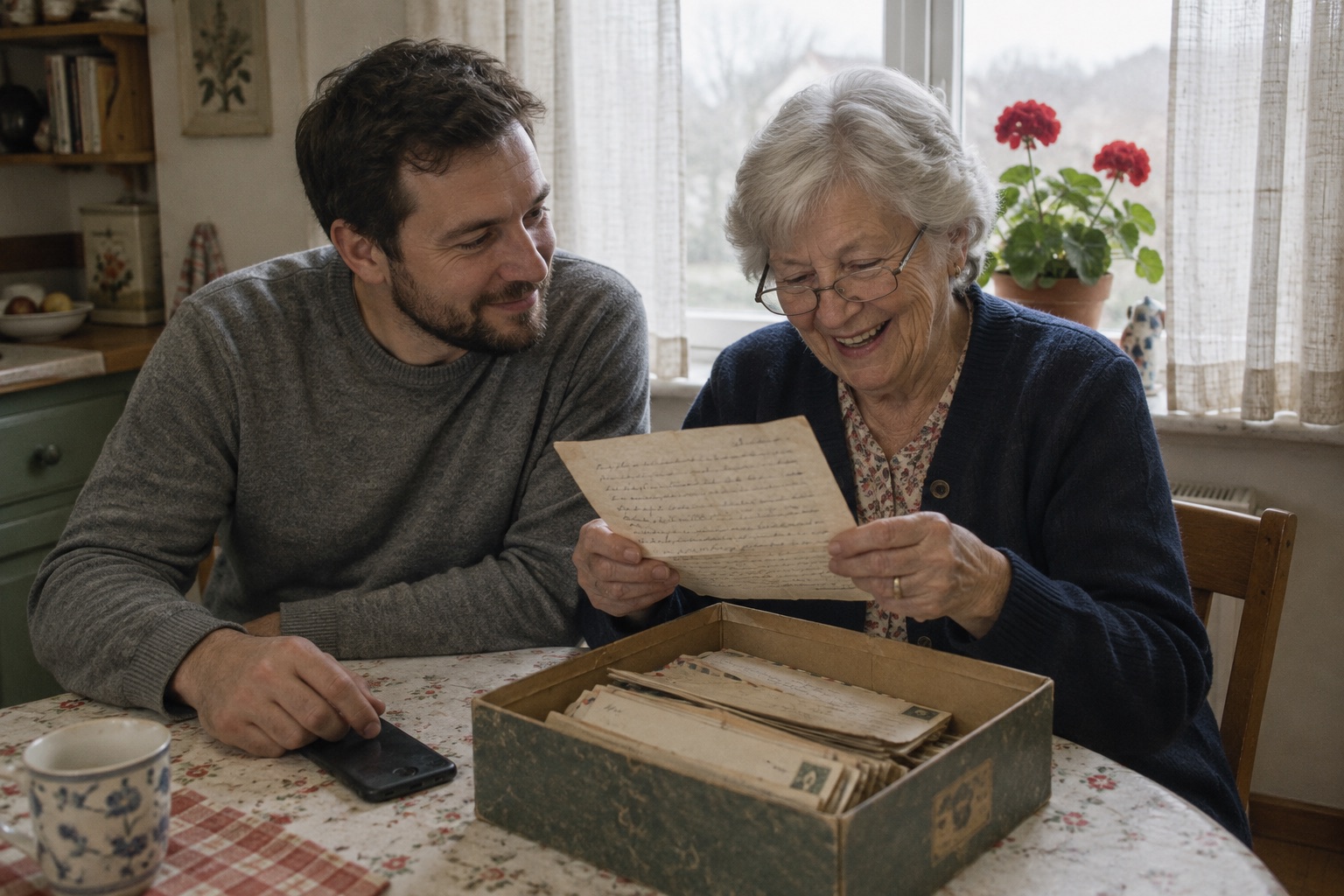
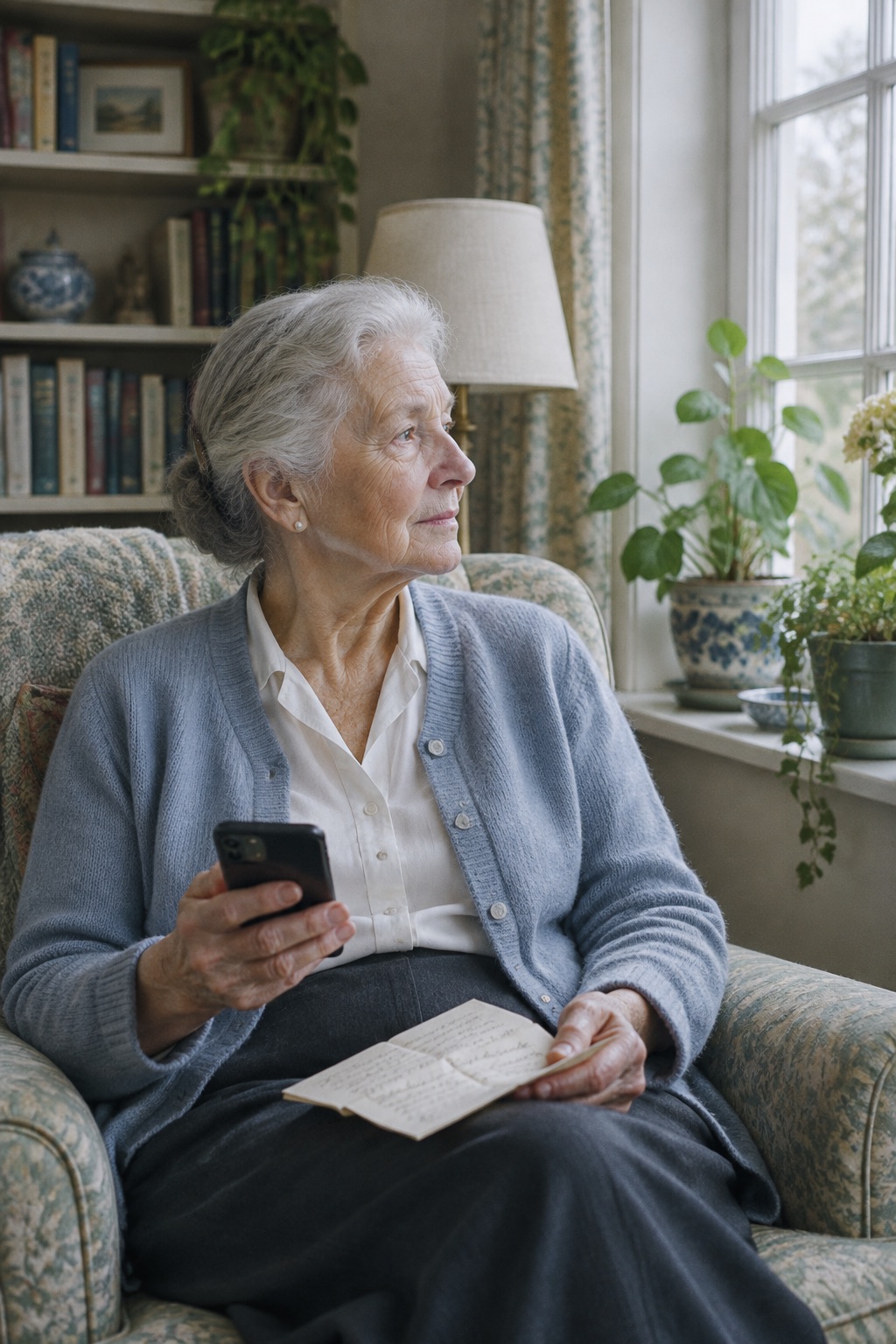
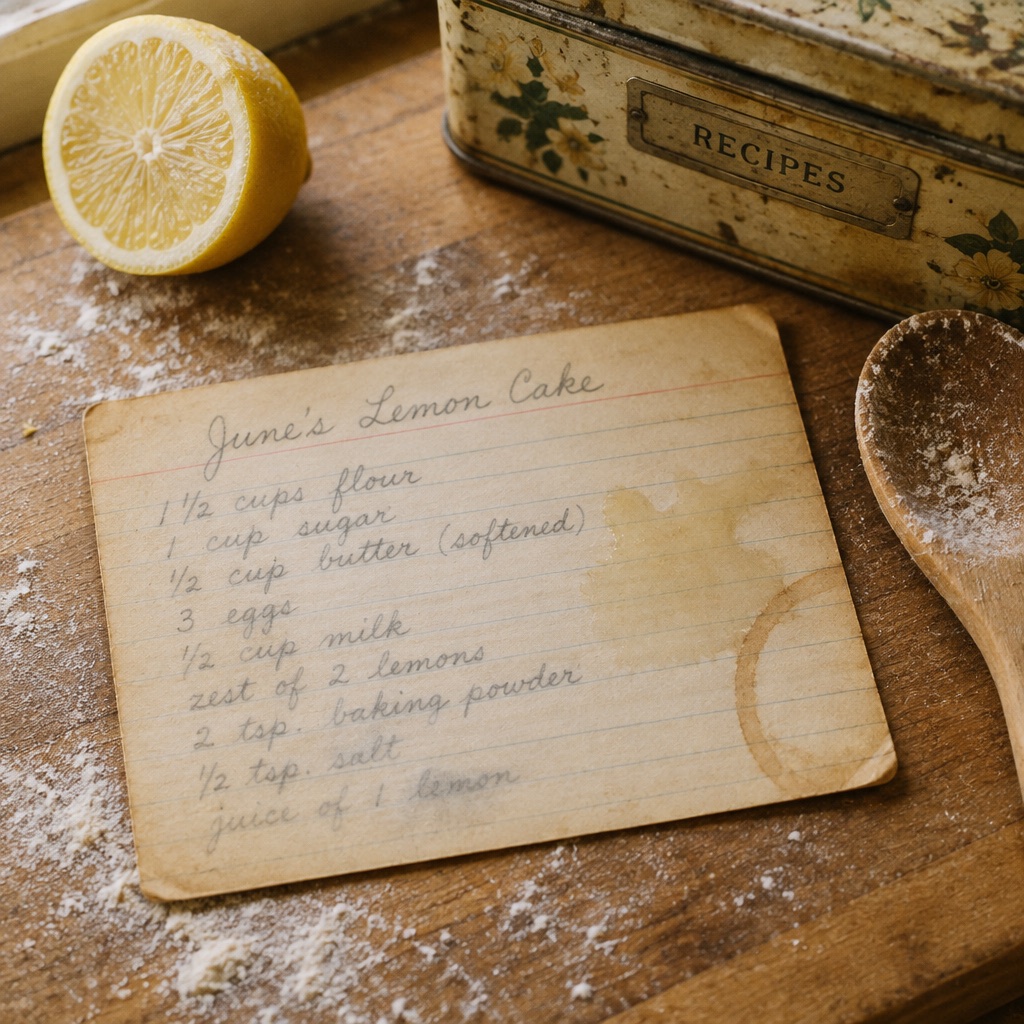
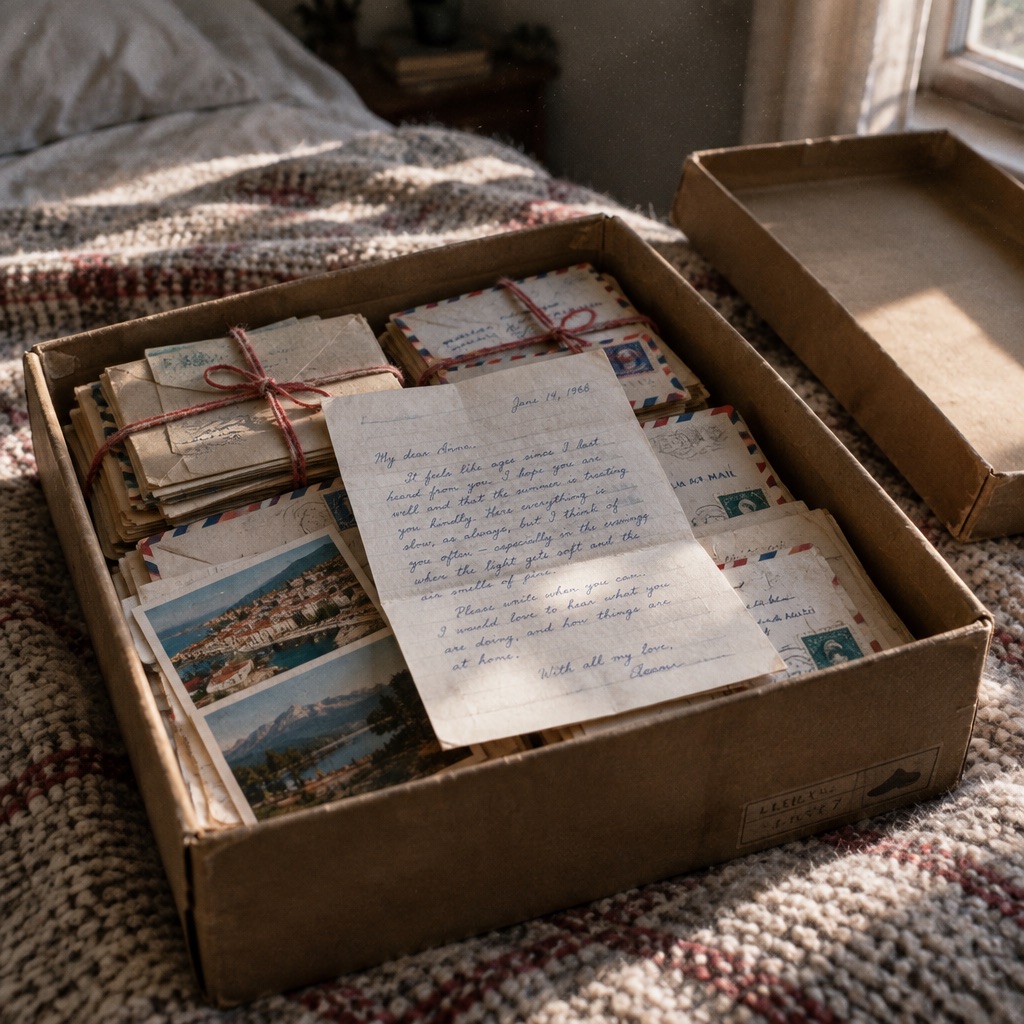
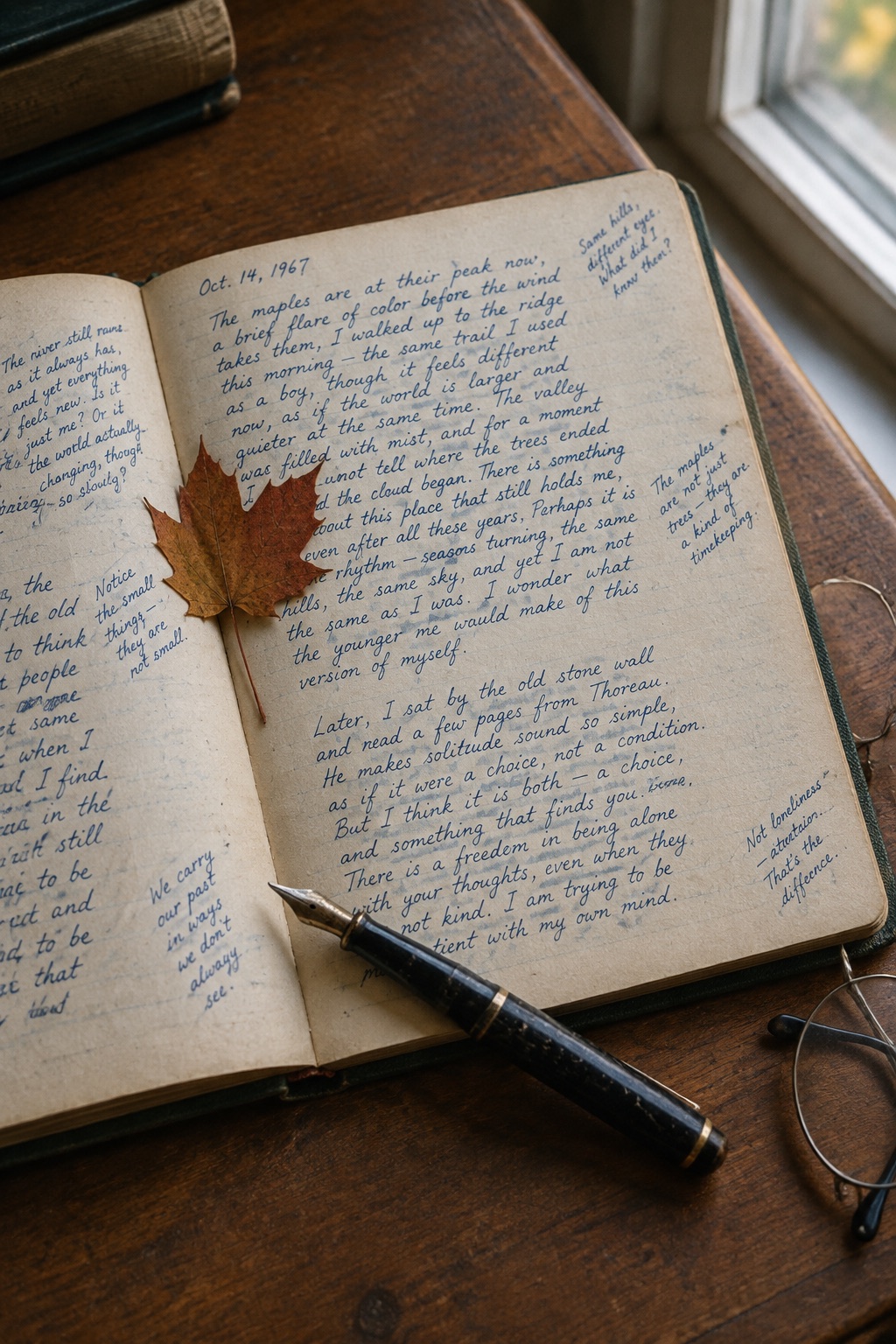
Memri has two signature movements, both at human pace. When she tells a story, her words fade in as she says them and each name settles into blue, then takes its place in the family graph with one drawn line. When a letter is read, handwriting rises a few pixels off the paper and lands as clear type, word by word. Nothing spins, bounces or zooms. Only at the moment something is kept does a small folded bird fly, once.
400 ms, ease-out700 ms, 60 ms stagger600 ms, cubic(.2,.7,.2,1)1.2 s, once per save500 ms fadespeaking pace600 ms, once900 ms draw900 msWith reduced motion turned on, words appear in place with no lift or fade, graph lines appear drawn, and the bird is replaced by a check mark. Motion never carries information on its own.
Older adults lost billions to fraud last year, including voice-clone “grandchild in trouble” calls. Our brand only works if a family can hand Memri to someone they love without a second thought.
Memri never recreates a real person's voice without that person's own documented consent. By default it reads in its warm reader voice. A living family member can record their voice for Memri, and can withdraw it.
Every conversation opens with it, every screen shows it, and the setting cannot be turned off. Memri never speaks as a person in a letter or a photograph.
Answers come from the page and from notes the family added. When Memri doesn't know, it says so and invites the person to tell it.
The family decides who can see what. Private by default, never used to train models, never sold, exportable and deletable in full.
When a photograph moves, a small label says the motion was made by Memri from the still image. The original is always one tap away.
No streaks, no nagging, no ads. Memri can be paused by the family at any time, and it is not a medical device or a substitute for care.
We don't bring anyone back. We bring their words to the table, and make room for the people still here to answer.
Memri brand principle