 MemriPre-seed · Draft for discussion · 2026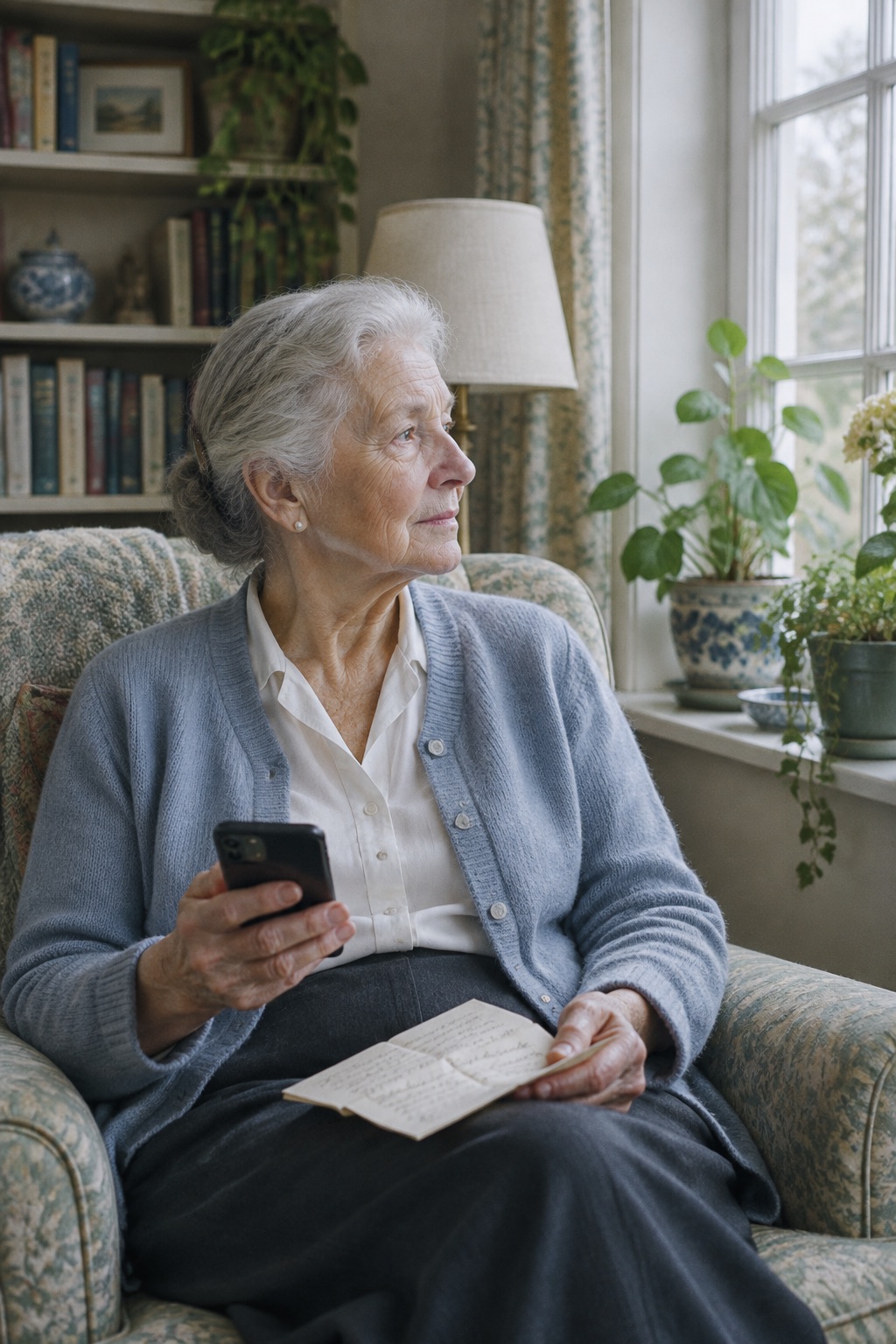
Investor presentation

Every photograph has a story waiting to be asked.
She points her phone at an old picture and a calm voice asks, “Tell me about this one.” Then the next. Her answers bring the photos and letters to life, and stay with the family who comes next.
Memri02 · The moment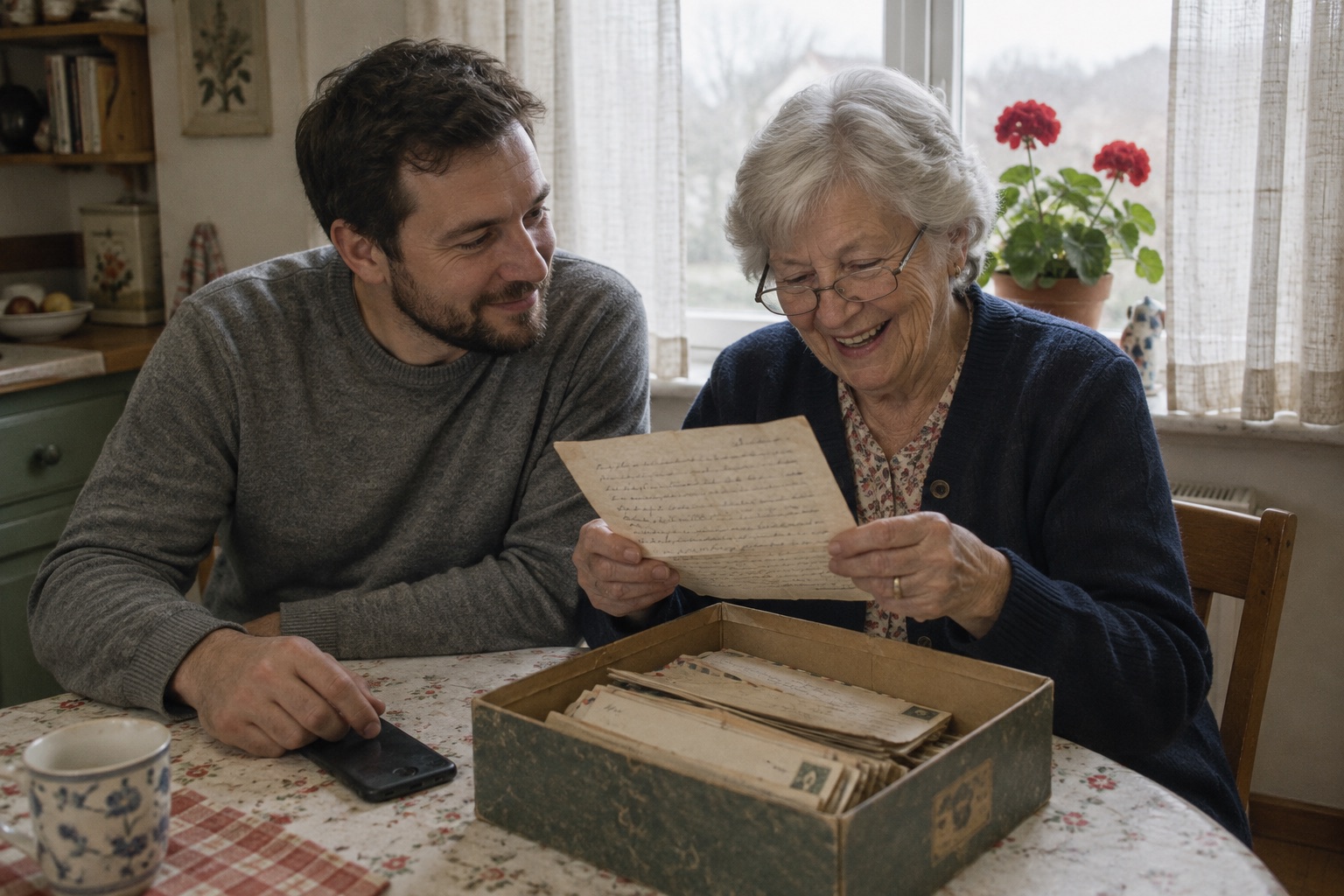
The moment
A shoebox of photographs, and someone finally asking.
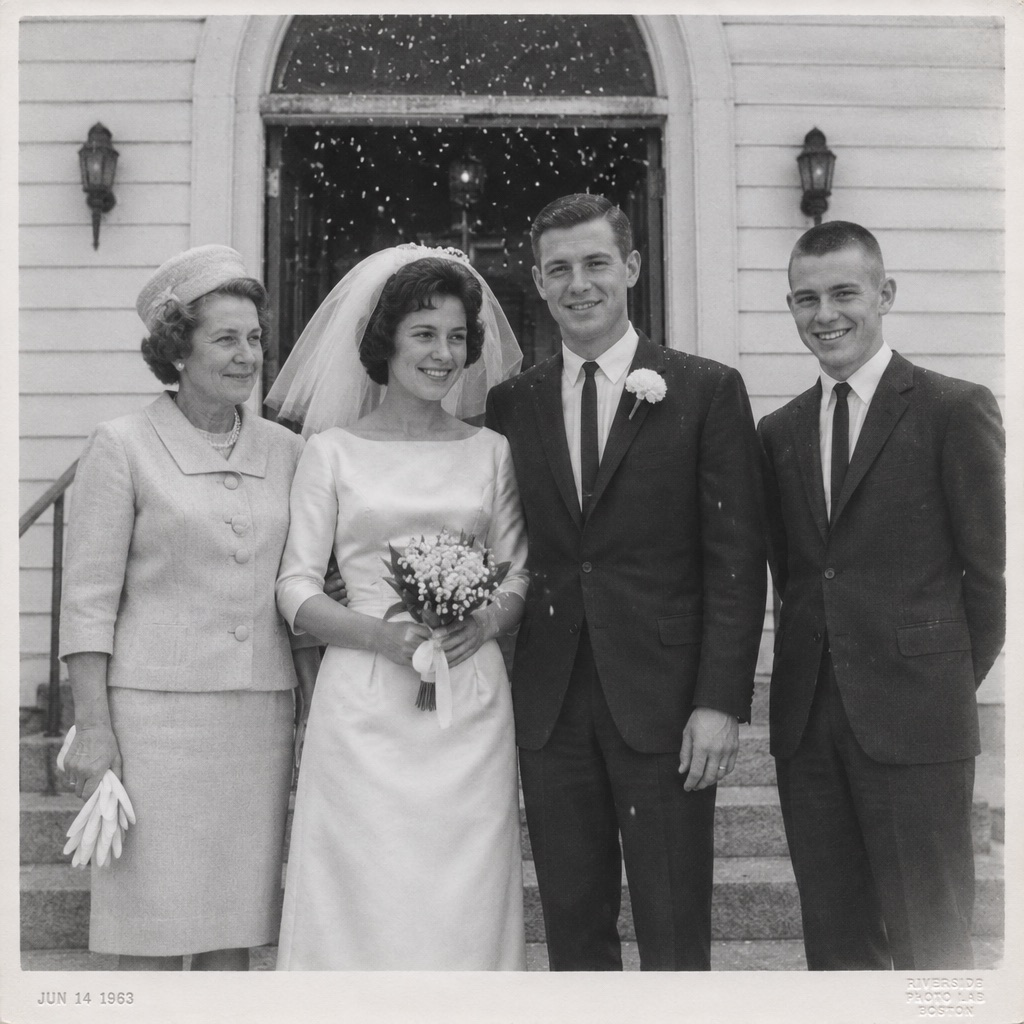
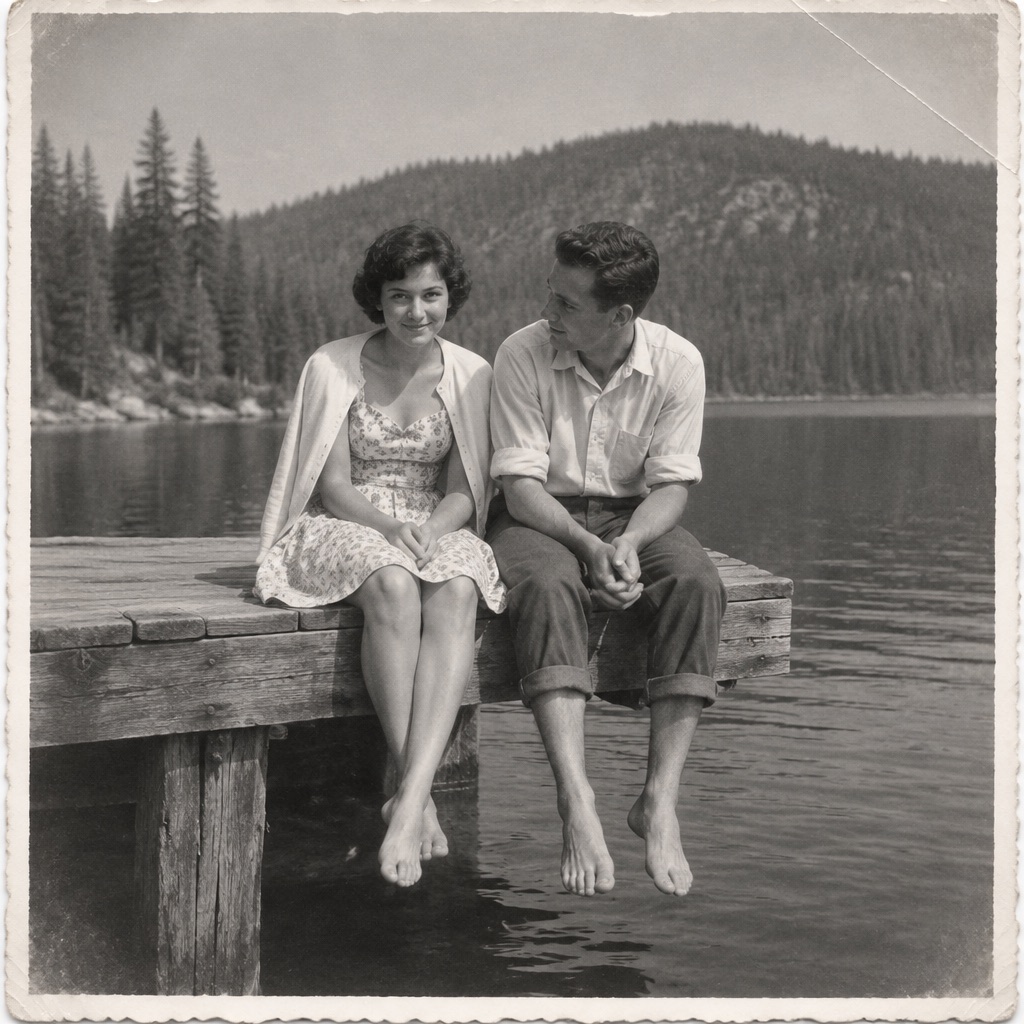
Ruth is 84 and lives alone. Her grandson Sam sets up Memri and sits with her for the first three photos. She holds her phone over the wedding picture from 1963. A calm voice that says it is AI asks, “Tell me about this one.” She talks. “Who's standing next to you, in the hat?” Aunt June, who made the dress. Then the lake, 1962. Then the day the shop opened, 1971.
By the third photo Memri knows who Artie is. The lake photograph moves, gently, and when she points at Walter's 1962 letter and asks about the lake, Memri answers from her own story. Every word is kept in her voice for her grandchildren.
Illustrative scenario The idea began as a story: in our short film KEEPSAKE, a boy builds this for a lonely neighbour.
Memri03 · ProblemProblem
Loneliness among older Americans is not fading on its own.
Americans 65+ live alone. That is 26% of all adults 65+, and 38% of those 85+.
Adults 50–80 who felt lonely or isolated, share by year
higher risk of dementia associated with social isolation
higher risk of heart disease / stroke associated with poor social relationships
a year in extra Medicare spending associated with lack of social contact
of women 75+ live alone, often with a lifetime of photos and letters and no one to go through them with
After the 2020 spike, loneliness returned to its 2018 level. It did not improve. The families who would help are stretched thin, and the things that hold a life's memories sit in drawers.
Sources: Census CPS 2023 via KFF Health News (2024); Pew Research Center, ACS 2023 (2025); Census Bureau (2024); Univ. of Michigan National Poll on Healthy Aging, JAMA, via UPI (Dec 2024); National Academies, Social Isolation and Loneliness in Older Adults (2020); AARP Public Policy Institute (2017).
Memri04 · Why nowWhy now
The people who need it now carry the device that can do it.
Demand is proven
10 million
faces were animated with MyHeritage's Deep Nostalgia in about two weeks in 2021. It deliberately added no speech. Nobody has made the family's own photos and letters something you can talk to.
The buyer is ready
54% of Americans in their 40s are sandwiched between an aging parent and their own children. There are 63M family caregivers in the U.S.; seven in ten are employed.
Qualitative Reading old cursive, natural speech and photo animation now run at consumer cost on a phone plus cloud. Two years ago this product needed a studio.
Sources: AARP Research, 2026 Tech Trends (survey Sep–Oct 2025); Pew Research Center Mobile Fact Sheet (2025); Newsweek on MyHeritage Deep Nostalgia (Mar 2021); MyHeritage blog (Feb 2021); Pew Research Center (Aug 2026); AARP & NAC, Caregiving in the US 2025.
Memri05 · Solution & how it worksSolution
The way in is a photograph and a question. Everything else is built on her answers.
i. POINT, TELL, NEXT
She talks. Memri listens.
Point the phone at a photograph. A calm voice asks for the story and a gentle follow-up or two: who's there, where it was. Then the next picture. Names, places and dates are picked up as she talks.
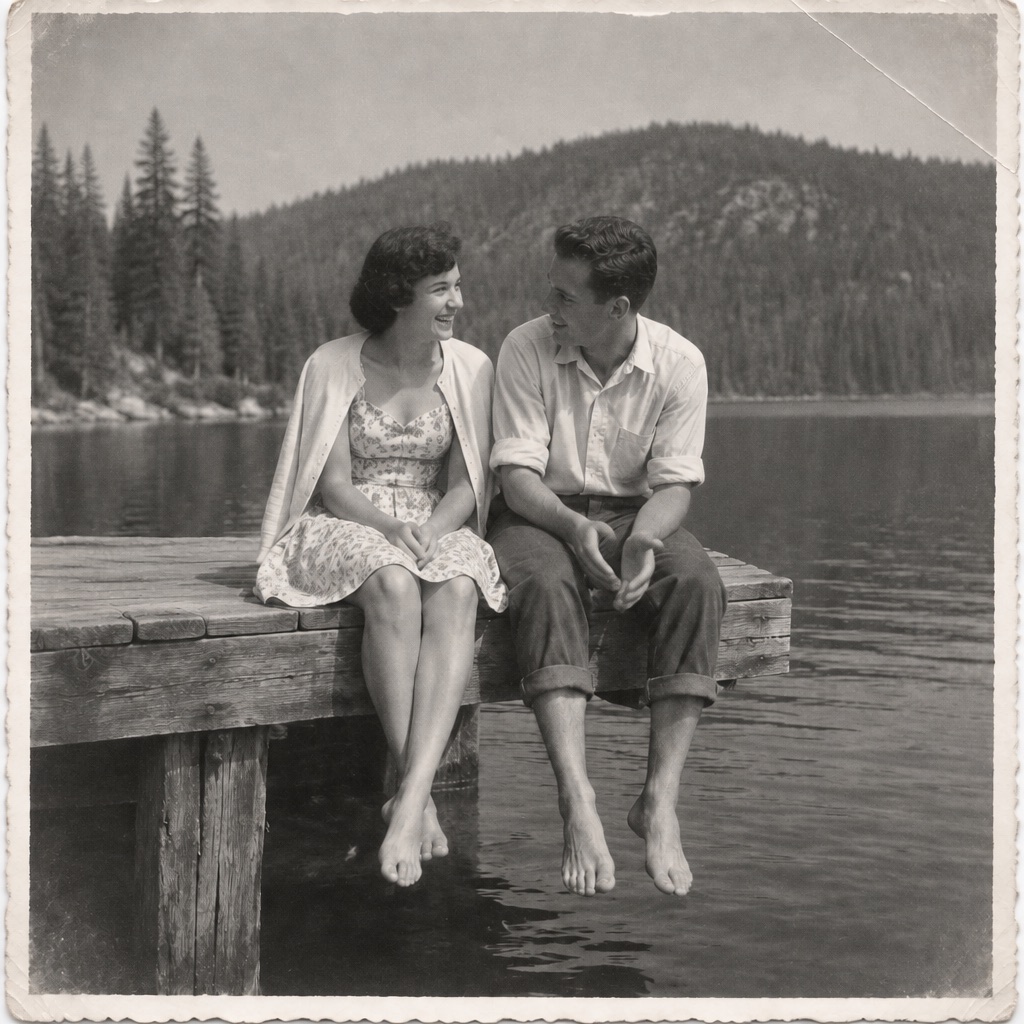
to the lake
ii. IT COMES ALIVE
Photos move. Letters speak.
Because she told it, Memri knows who is where and what was happening. Photographs move, gently and labelled; handwriting is read aloud; and the daily companion answers from her own words. It always says it is AI.
iii. PASSED ON, AND LINKED
Her voice, and her family graph.
Every story is kept in her own voice. Every name becomes part of a family graph, linked to the photo and the moment she said it. Tap a person to hear everything she told about them. It belongs to the family.
Memri06 · DemoDemo · story capture
“Tell me about this one.” Then the next.
Next: the lake, 1962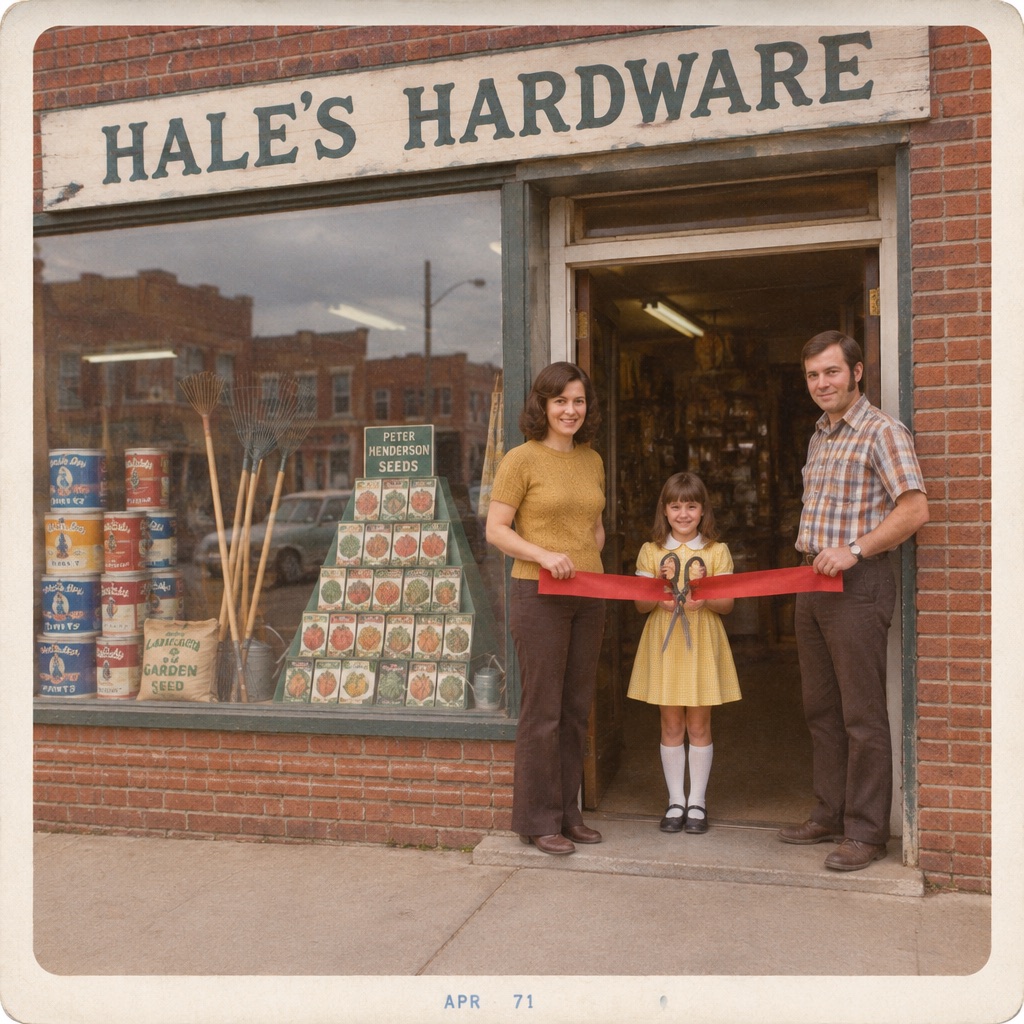 Then: the shop, 1971
What Ruth says
Prototype demonstration. Photographs, names and family are illustrative. The voice that asks is Memri's own AI voice. After three photos, the pictures move gently and labelled, and letters and questions are answered from what she said.
Memri07 · MarketMarket · bottom-up, U.S. only
Priced per older adult, paid for by the family.
Squares drawn to scale by revenue.
| Method | People | $ / yr | |
|---|---|---|---|
| TAM | 61.2M adults 65+ × 78% smartphone ownership | 47.7M | $5.68B |
| SAM | 16.0M adults 65+ living alone × 78% Assumes the same smartphone rate; likely lower, so an upper bound | 12.5M | $1.49B |
| SOM | 0.5%–1.0% of SAM within ~5 years Estimate. For scale, Storyworth reports 1M+ books printed since 2013 | 62k–125k | $7.4M–$14.9M |
Assumptions Price $119 per older adult per year (the recommended annual plan). Smartphone share applied to the living-alone group and the capture rates are assumptions; every other input is sourced.
Adjacent pools the family already spends from: $120B aging-technology market by 2030 (AARP projection) and $172B a year in grandparents' direct support to grandchildren. No primary-source size for the family-memory app market exists; we did not invent one.
Sources: Census Bureau Vintage 2024 (2025); Pew Mobile Fact Sheet (2025); Census CPS 2023 via KFF Health News; Storyworth (accessed Sep 2026); AARP (Jan 2025; Jun 2026). Market sizing is a Memri estimate.
Memri08 · CompetitionCompetition
Each category does one part. None does all three.
| Product | Brings photos & letters to life | Daily companion | Records her story | Family-tended | Family pays |
|---|---|---|---|---|---|
| Memri | ● | ● | ● | ● | $119/yr or $12.99/mo |
| Storyworth · Remento · Tell MelMemoir: captures the story once, as a book | — | — | ● | ● | $39–$219/yr |
| inTouch · MeelaVoice companion calls; no photos or family-authored content | — | ● | ◐ | ◐ | $29.99–~$40/mo |
| ElliQCompanion device; no family-memory layer | — | ● | — | ◐ | $39–$59/mo + $249 |
| MyHeritage · Keepsake appAnimate faces or make clips; silent or one-shot, no conversation | ◐ | — | — | — | $49.99/yr |
| HereAfter AI · StoryFileVoice legacy / conversational video: reported shut down; post-Chapter 11 | — | — | ● | ◐ | Formerly $3.99–$7.99/mo |
● does this ◐ partly — no. Our reading of each product's public pages, Sep 2026.
Memoir apps capture once. A year of prompts, then a book on the shelf.
Companions chat daily, but they don't start from the family's own photos, letters and names.
Photo tools animate faces silently. MyHeritage chose no speech "to prevent abuse."
Memri joins the three, set up and tended by family, with trust built in.
The real threat: genealogy platforms with the archives (Ancestry, 3M+ paying subscribers) could add conversation. Our answer is on the next slide.
Sources: Company pricing and home pages accessed 28 Sep 2026 (Storyworth, Remento, Tell Mel, inTouch, ElliQ, MyHeritage Help Center, App Store: Keepsake); Forbes via Forbes Africa (Oct 2025) for Meela; Afterlife AI blog (HereAfter, secondary); AV Magazine (Mar 2025); MyHeritage blog (Feb 2021); Ancestry company facts.
Memri09 · Why we winWhy we win · in this category, trust is the product
Nothing forgotten. Nothing faked.
01 · The capture loop is the wedge
Storyworth books printed since 2013. Adult children already pay to get a parent's stories down.
Memoir apps ask her to write. Memri asks her to look at a picture she already owns and talk. Low effort for her, high emotional value for the family, and every answer is the context that makes the animation, the letter reading and the companion good. The family is the buyer and the audience; she only has to remember.
02 · A family graph that's theirs
Names, places and days from her own stories, each linked to the photo and the recording.
The graph compounds: the tenth photo is easier to bring to life than the first, and the companion knows who Artie is. A generic companion or a genealogy archive does not have it. It is private, exportable in full, never sold and never used to train models. Our moat is being the place a family trusts to keep it, not owning it.
03 · Trust first
lost by Americans 60+ to reported fraud in 2025, up 59%. $352.5M of it was AI-related, including voice-cloned "grandparent" scams.
Memri never clones a real person's voice without documented consent; it always says it is AI; it never asks for money, codes or personal details. Names come from what she says, not face recognition. California's SB 243 and rules in New York, Maine and Utah now require disclosure. We start compliant.
Sources: Storyworth home page (accessed Sep 2026); FBI IC3 2025 Annual Report (Apr 2026); Future of Privacy Forum on CA SB 243 (2025). Lesson from the category: HereAfter AI reportedly shut down (2026) and StoryFile went through Chapter 11, so we price for margin and cap costly photo animations per plan.
Memri10 · Business model & pricingBusiness model · family subscription
Above memoir apps, well below companions.
Recommended launch price
per month, family plan
per year, about 24% less; sold as a gift
First photo or letter free. Seeing it come alive is what sells it. One plan covers one older adult and the family members who tend it.
Why this price: ongoing, so worth more than a one-year memoir; no hardware and no human staff, so far cheaper than a companion device or call service. Photo animations use paid AI video, so plans cap them, as MyHeritage caps LiveMemory at 20 a year.
What families pay per year, by category (USD)
| Memoir, onceStoryworth, Remento, Tell Mel | $39–$219 |
| Photo animationReimagine, Keepsake | $49.99 |
| Memri$119/yr or 12 × $12.99 | $119–$156 |
| Voice companioninTouch, Meela | $360–$480 |
| Companion deviceElliQ, incl. lease fee | $717–$957 |
Tests at launch $9.99 vs. $14.99 a month · $119 vs. $149 gift year with a printed keepsake of her stories · extra seats for siblings.
Sources: Pricing pages accessed 28 Sep 2026: Storyworth, Remento, Tell Mel, MyHeritage Reimagine, App Store (Keepsake), inTouch (PR Newswire, Jul 2025), ElliQ; Meela ~$40/mo via Forbes (2025); Incarn on LiveMemory caps (2026). Memri price is a recommendation (analyst estimate), not a tested result.
Memri11 · Go-to-marketGo-to-market
Sell to the adult child, around the moments families give.
Who buys
A daughter or son in their 40s or 50s with a parent who lives alone. 54% of Americans in their 40s and 45% in their 50s are sandwiched (up from 36% in 2021).
Where they are
Among adults 30–49, 80% use Facebook and 92% YouTube; among 50–64s, 74% and 85%. A 30-second film of a grandmother telling the story of her wedding photo fits both.
When they buy
Holiday gifting, the Storyworth pattern: the $119 gift year.
Mother's Day: a record $38B forecast for 2026; 39% of shoppers put "creating a special memory" first.
Grandparents Day: 12 September 2027, the first one after launch.
Partners, then payers
Senior living activity programs; occupancy hit 89.9% in Q2 2026. Genealogy communities: Ancestry has 3M+ paying subscribers; RootsTech is the main event.
Later, public payers: New York's aging office bought ElliQ for 800+ older adults, and more than 65 Medicare Advantage plans signed with Papa.
Sources: Pew Research Center (Aug 2026); Pew Social Media Fact Sheet (2025); NRF (Apr 2026); Old Farmer's Almanac; NIC (Jul 2026); Ancestry company facts; RootsTech newsroom (2026); NYSOFA (Aug 2023); KFF Health News (Mar 2022). Full 90-day plan in the GTM document.
Memri12 · RoadmapRoadmap · proposed
App first. Partnerships next. A device only if families ask.
Phase 1 · months 0–9
The family app
- iOS and Android; photo story capture first, then handwriting, companion and the family graph
- Private beta with families, then a holiday gift-year launch
- Trust baseline: AI disclosure, no voice cloning without documented consent, export and delete
- Geriatric and dementia advisers in place before any facility pilot
Phase 2 · months 9–24
Partnerships
- Senior-living activity programs: "tell me about this one" photo sessions
- Genealogy communities and scanning partners
- Grandparents Day 2027 campaign (12 Sep 2027)
- Evaluation study for NIA SBIR/STTR and state aging agencies
Phase 3 · 24 months + · optional
A simple device
- A countertop reader for the 22% of adults 65+ without a smartphone
- Built only if app retention and partner demand justify hardware
- Priced against companion devices ($39–$59/mo + $249), not memoir apps
Sources: Old Farmer's Almanac (Grandparents Day); NIA SBIR/STTR page and Crowell & Moring (Apr 2026); Pew Mobile Fact Sheet 2025 (78% of 65+ own a smartphone, so 22% do not); ElliQ pricing (accessed Sep 2026). Timeline is a proposal.
Memri13 · Risks & safeguardsRisks & safeguards
A product for vulnerable people has to earn trust first.
Sources: FBI IC3 2025; Future of Privacy Forum (2025); Fenwick (2024); Holland & Knight (2024); Cochrane review, Woods et al. (2018); MIT Media Lab (Mar 2025); MultiState (Feb 2026); Monroy v. Shutterfly via Technology & Marketing Law Blog; FTC (Sep 2025). Not legal advice; counsel review before launch.
Memri14 · TeamTeam
Who is building it.
The founder
Started Memri for a lonely grandmother and a shoebox of photographs nobody had asked her about.
Technical co-founder
Owns the architecture and the privacy baseline, and leads the first engineering hires.
Advisers we are recruiting
Geriatrician or dementia specialist · privacy and consumer-protection counsel · senior-living operator · a family caregiver who has used memoir and companion products.
Listed as open roles, not confirmed advisers.
Memri15 · The askThe ask · proposed
Raising a $1.5M pre-seed for 18 months to launch and prove retention.
Use of funds · proposed
About $675k, $375k, $225k and $225k. Round size, split and runway are a plan for discussion, not committed terms.
Non-dilutive, in parallel 2027 NIA Start-Up Challenge (submissions 1 Dec 2026–15 Jan 2027; $24k to up to 21 finalists, +$70k to 7 winners) · AgeTech Collaborative from AARP accelerator (no fees, no equity).
What the round buys: milestones for the next raise
- Launch the family app on iOS and Android with photo story capture first, all three modes and the trust baseline.
- Activation: share of new families whose parent tells the story of three photos within 48 hours.
- Retention: older adults still using Memri weekly at 90 days; families opening the weekly note.
- Referral: gift years and sibling seats per paying family.
- Two senior-living pilots with a published evaluation method.
Status: pre-launch. No users, revenue or letters of intent are claimed. Sources: NIA blog (Sep 2026); AgeTech Collaborative from AARP (accessed Sep 2026). Founder · memri.media