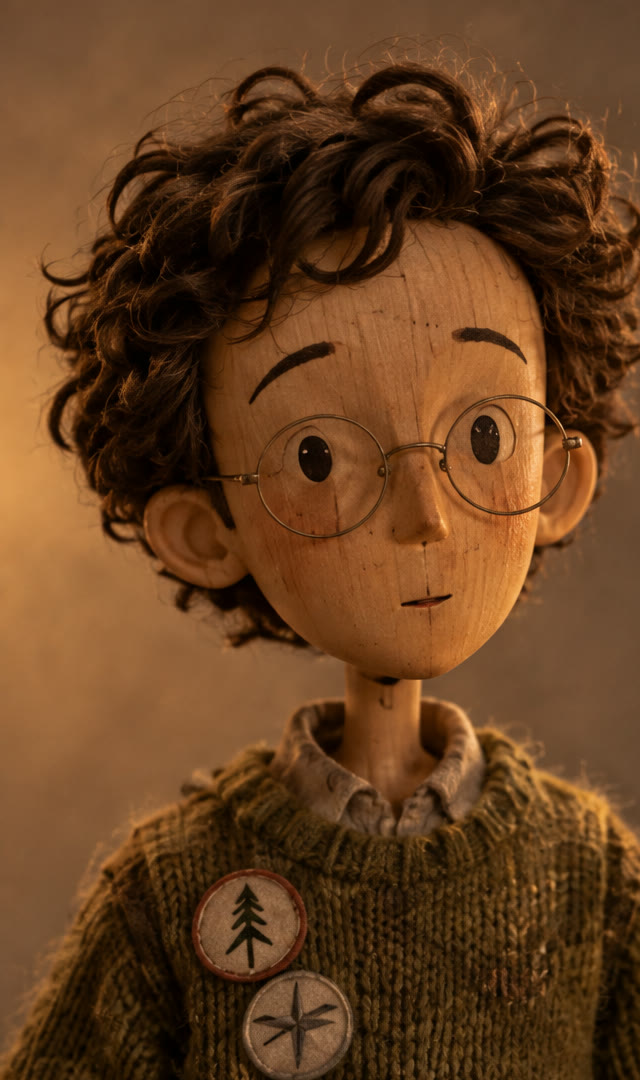
12¾ · the boy in the boiler room
Theo Reyes
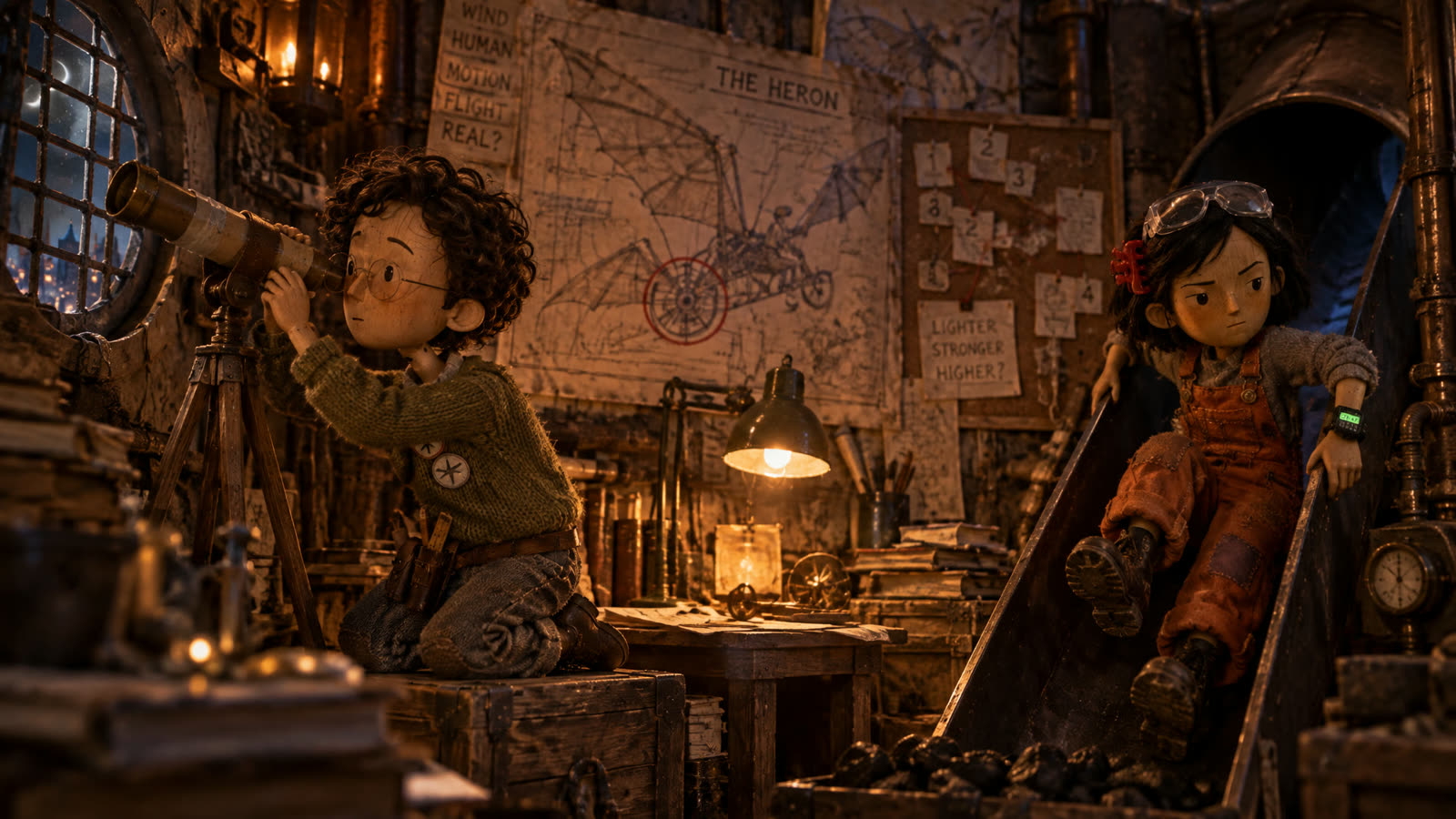
Keeper of logs, charts and theories. Awards himself felt badges because nobody else gives them out.
Night two thousand one hundred ninety-one. Two plates. One lady.
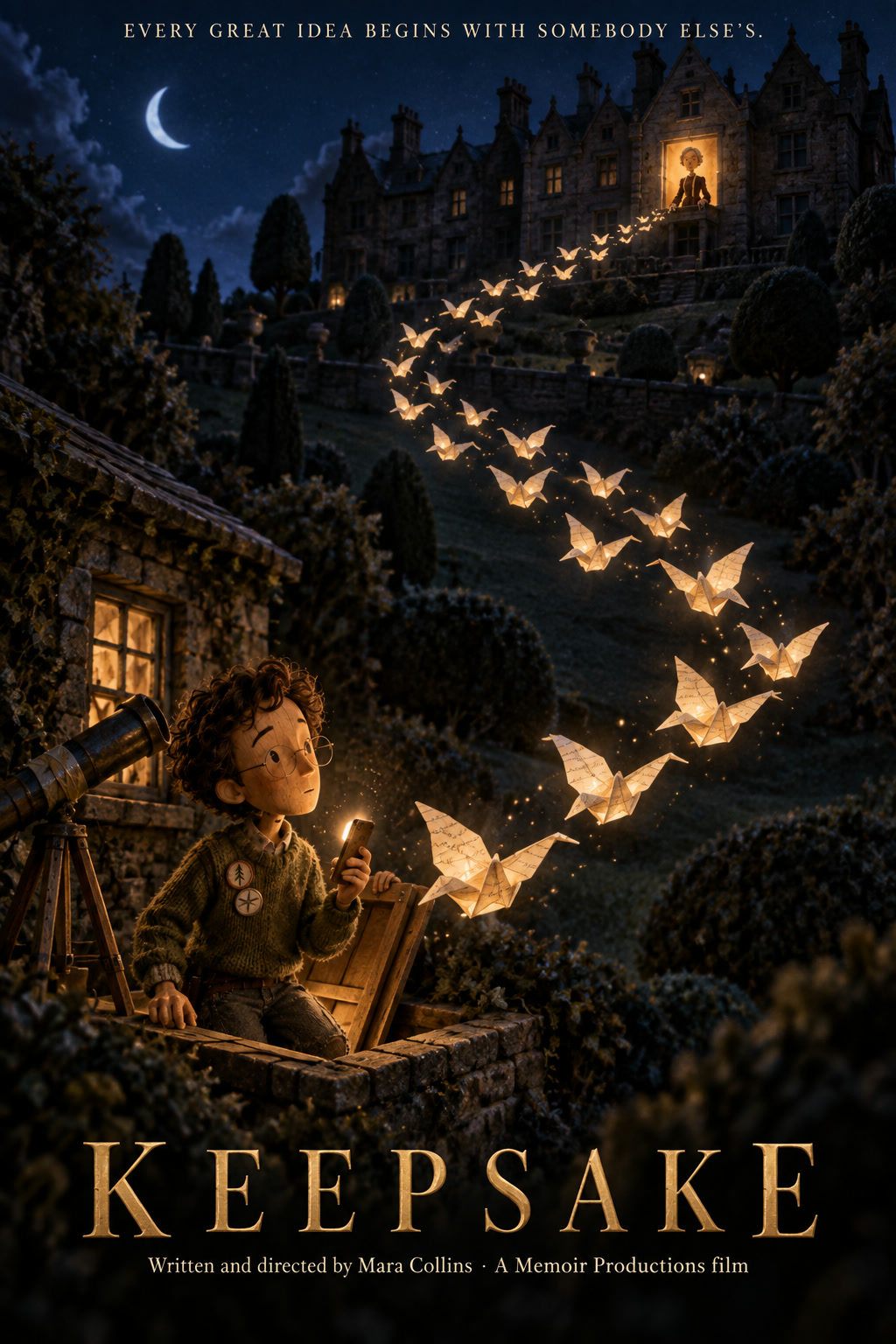
A twelve-year-old maker gives up his dream machine to prove that a dead inventor's greatest idea belonged to the widow at the long table — and breaks his mother's only rule to get the proof up the stairs.
Two plates. One lady. Two thousand one hundred ninety-one nights of watching.
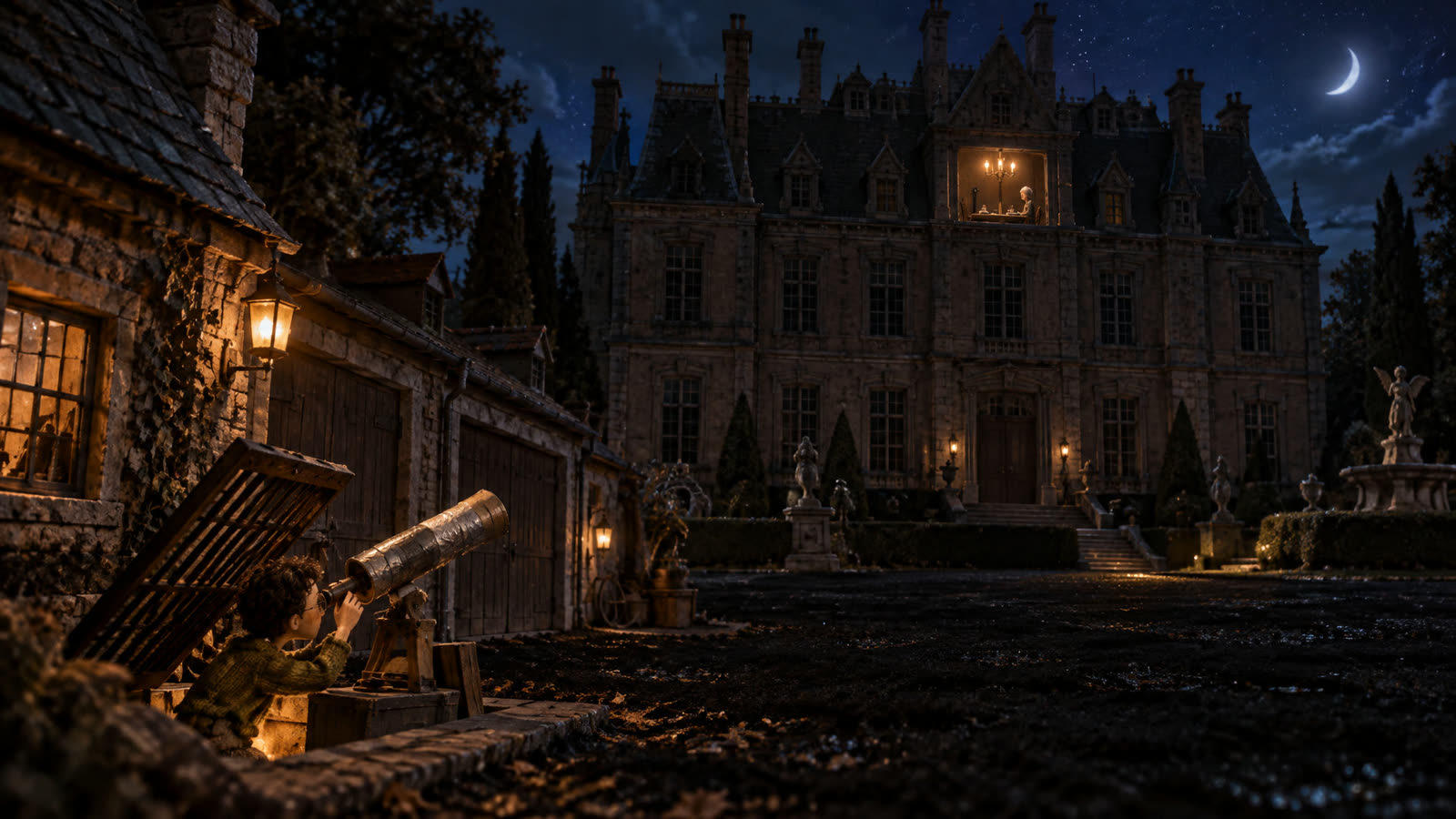
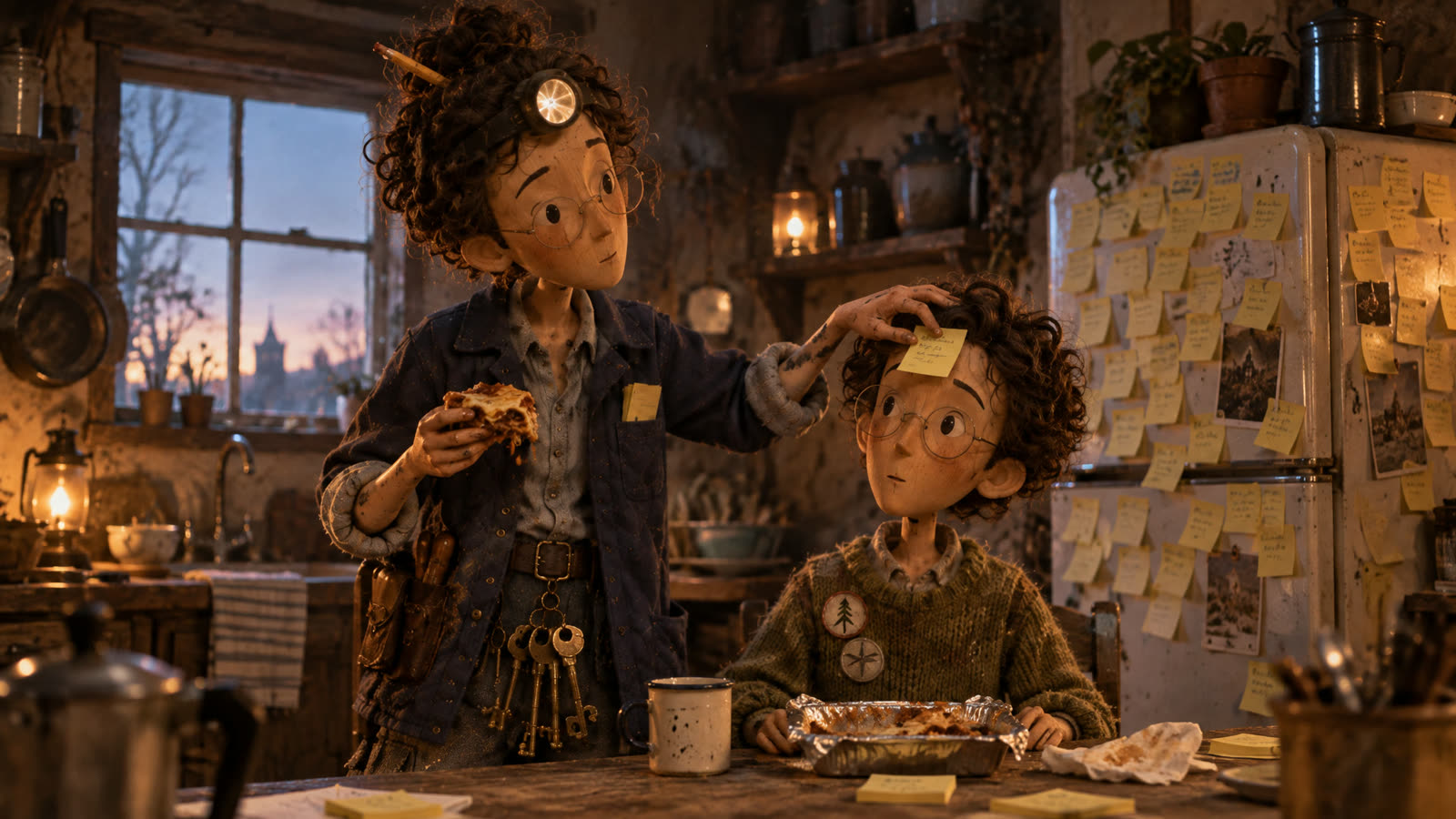
Theo Reyes is twelve and three-quarters. He lives in the staff cottage behind the garages of the Whitlock estate, where his mother works the night shift in the big house. They talk mostly in sticky notes left on a wrapped plate.
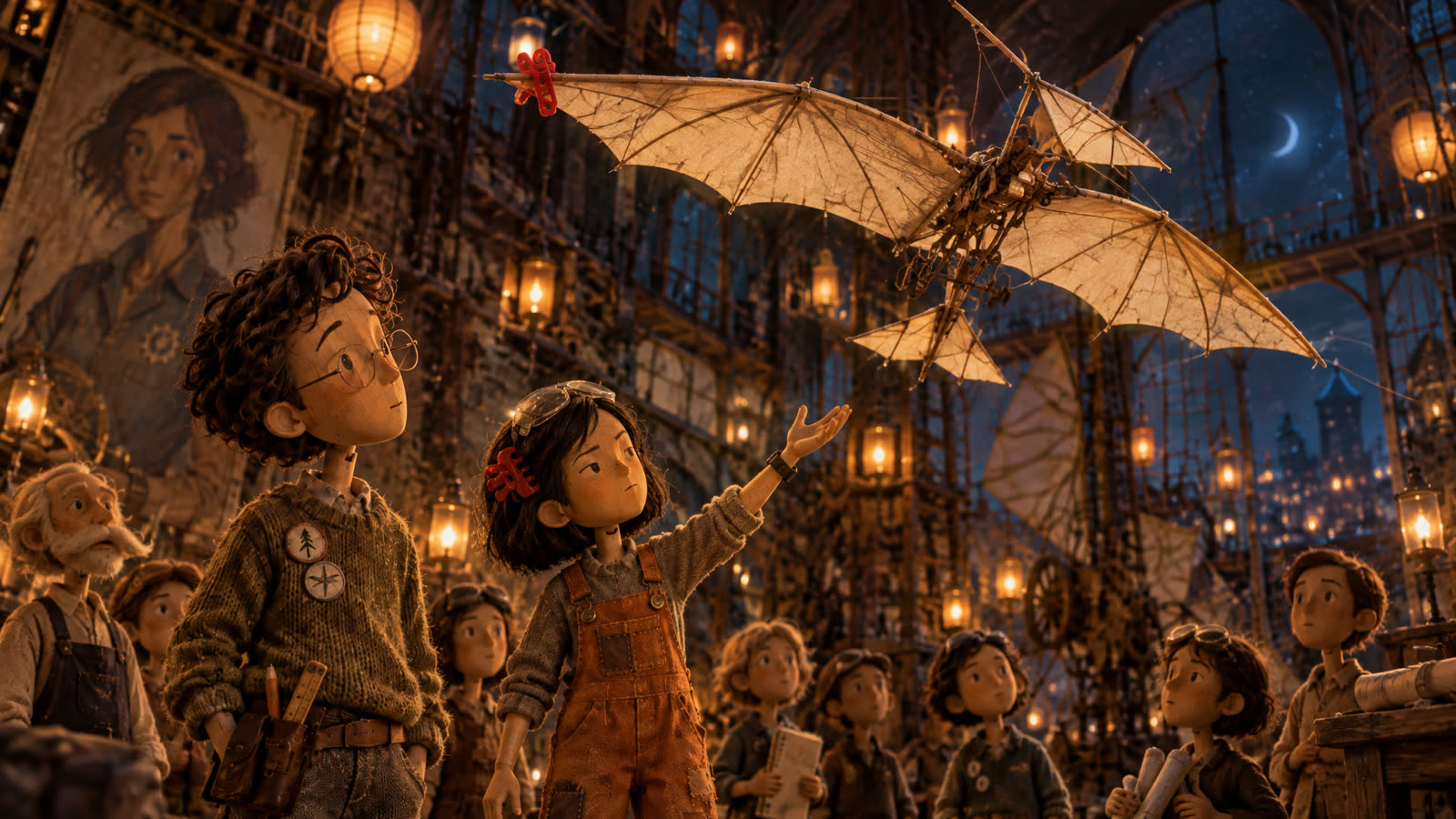
For six years Theo has watched the one lit window across the lawn: an old woman at a very long table set for two. This year he and his partner Priya are finalists in the Whitlock Prize for young makers. It's held in the famous inventor's old workshop, and the workshop holds the one part Theo's dream machine has always needed.
Then a notebook falls open in his hands, the margins start talking, and Theo has to decide what the prize is for.
Every puppet in Keepsake has a lacquered wooden face, real hair and hand-knit clothes. Nobody is a villain. Everybody is right about something.
Keeper of logs, charts and theories. Awards himself felt badges because nobody else gives them out.
Night two thousand one hundred ninety-one. Two plates. One lady.
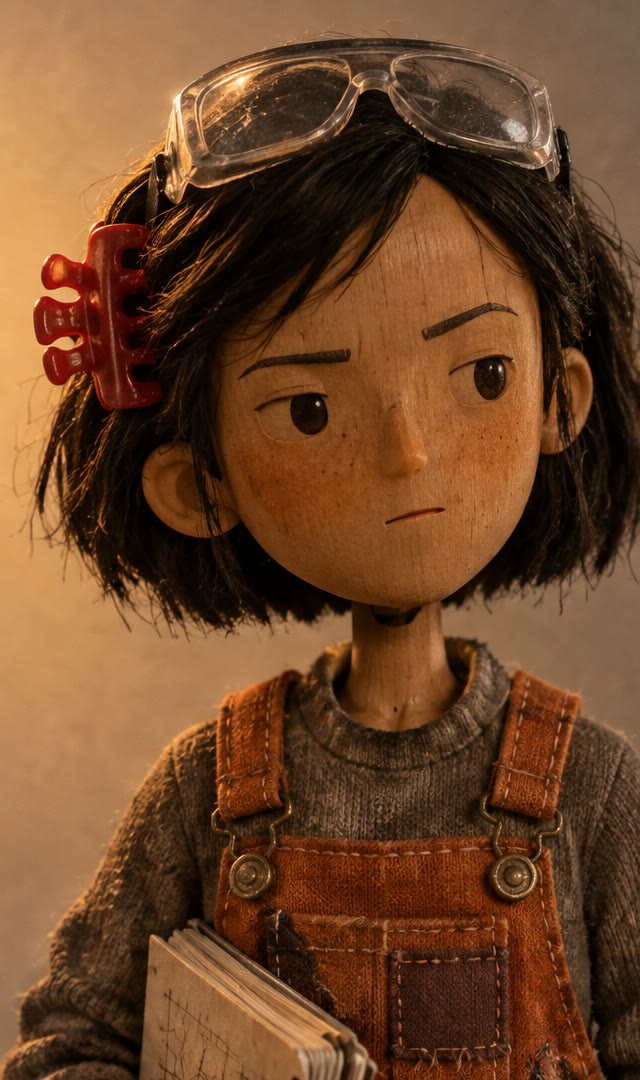
Small, fierce and dry. Right about the wing, the judges and the odds. Her family's roof leaks.
Your left wing math is wrong.
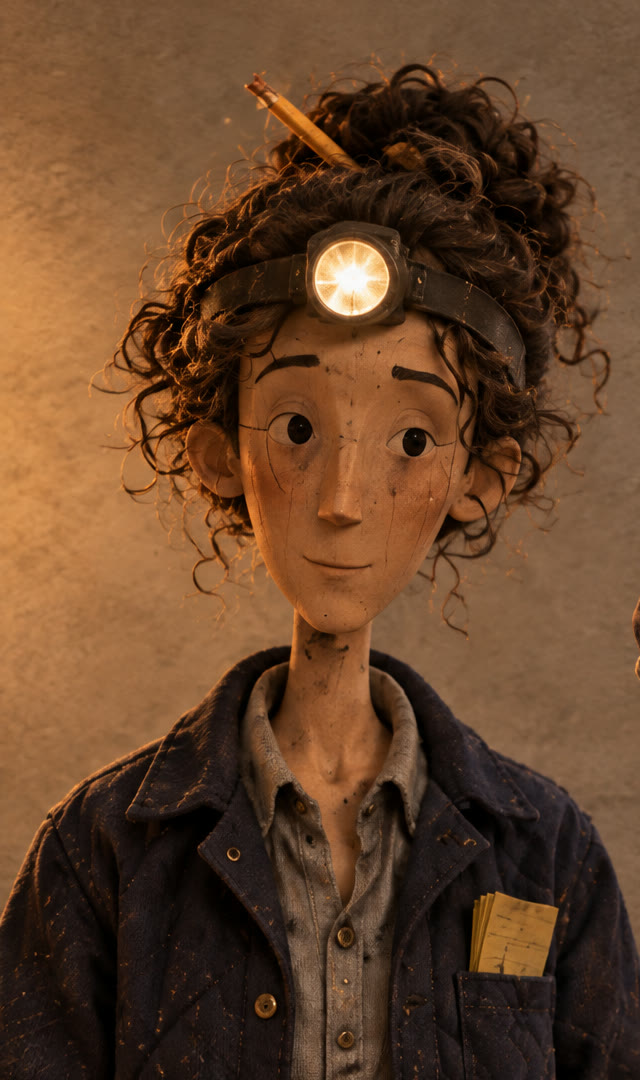
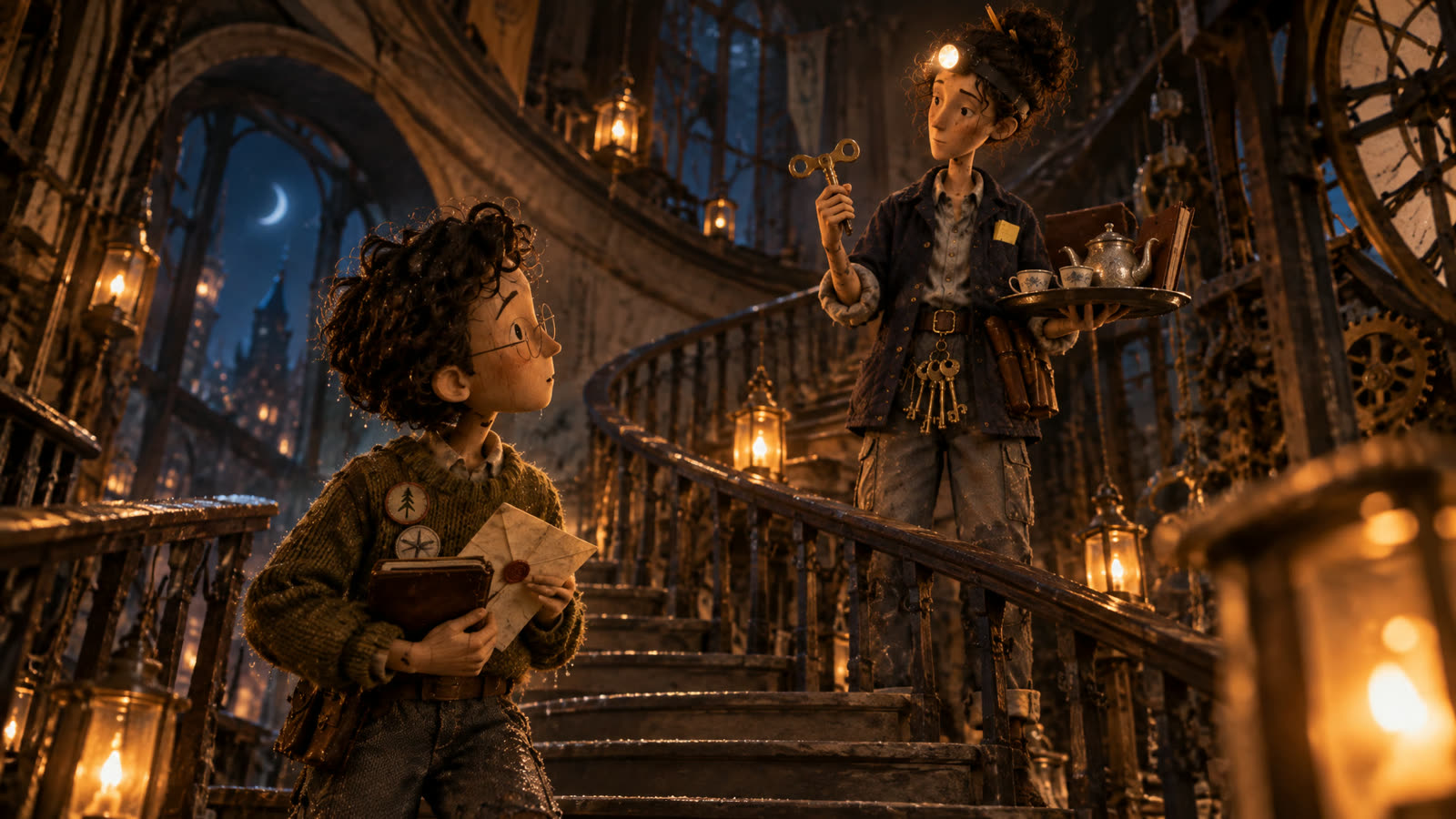
Keeps the boilers, clocks and fuse boxes of the big house running. A vault. Every note ends the same way.
Workshop door in, workshop door out.
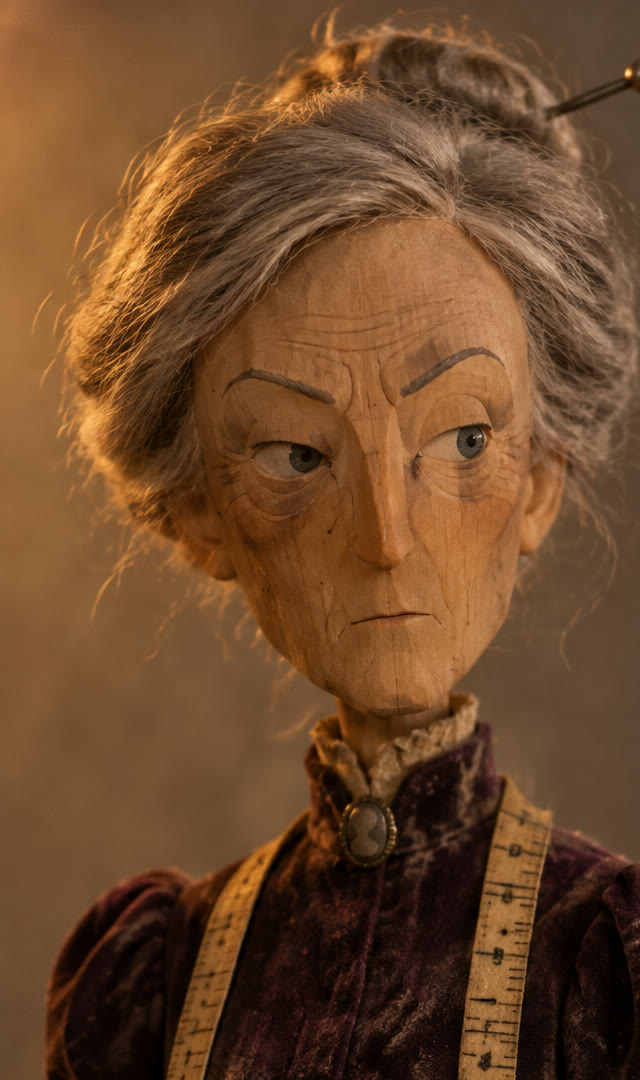
An engineer to the bone, alone at a table long enough to land a plane. Names the flaw before she says hello.
Begin. Try not to set anything on fire. The insurance people cry.
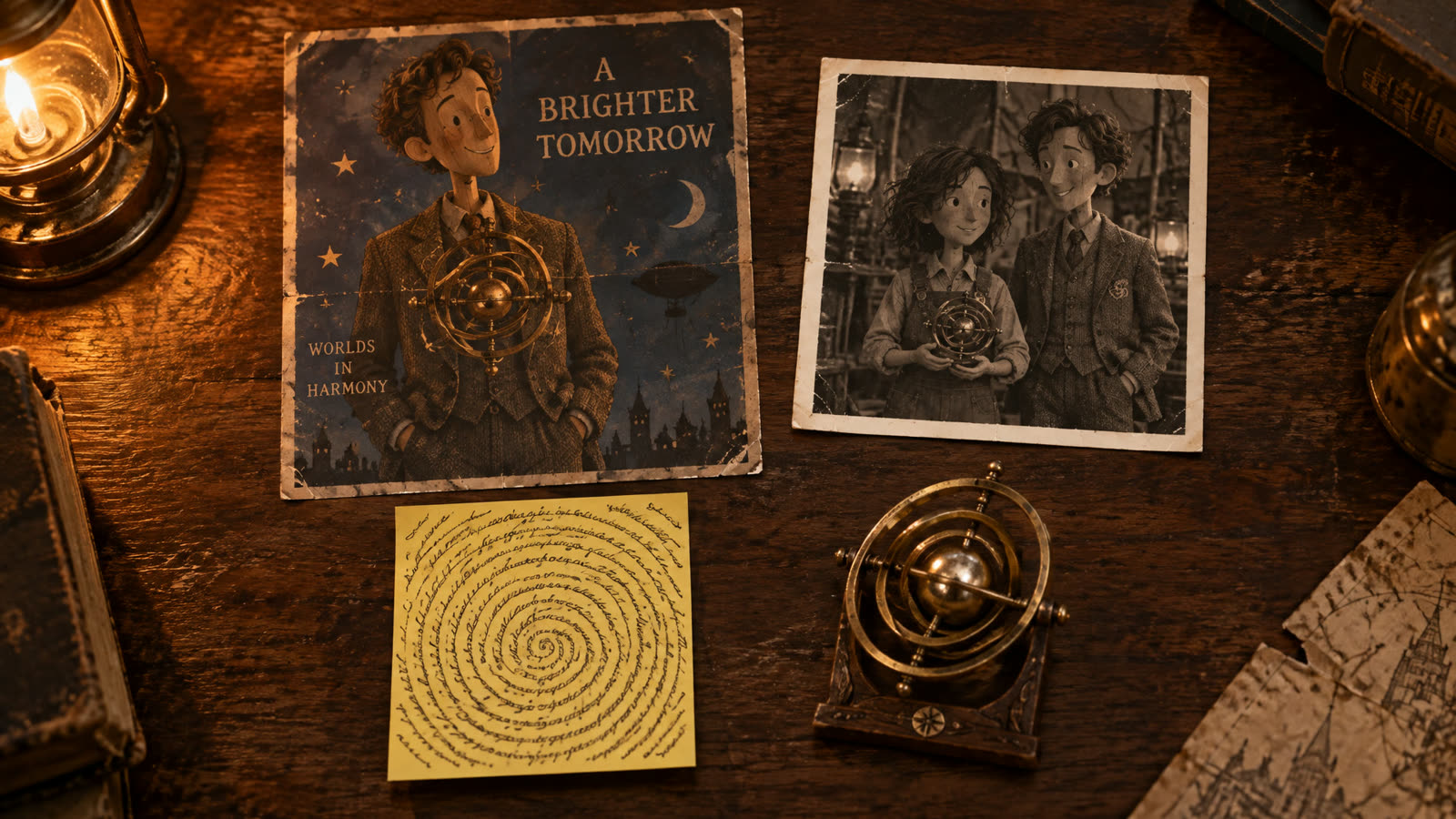
The famous inventor: tweed, a big grin and a 1974 television slogan that still loops in his old workshop. “Every great idea begins with a single spark.” His poster hangs over the prize. Look closely at his hands.
Everything in Keepsake was obviously made by someone: carved faces, balsa and paper sets, a lawn of black felt. Only words are paper. When handwriting comes alive, it lifts off the page and folds itself into a small bird that reads aloud in its writer's voice.
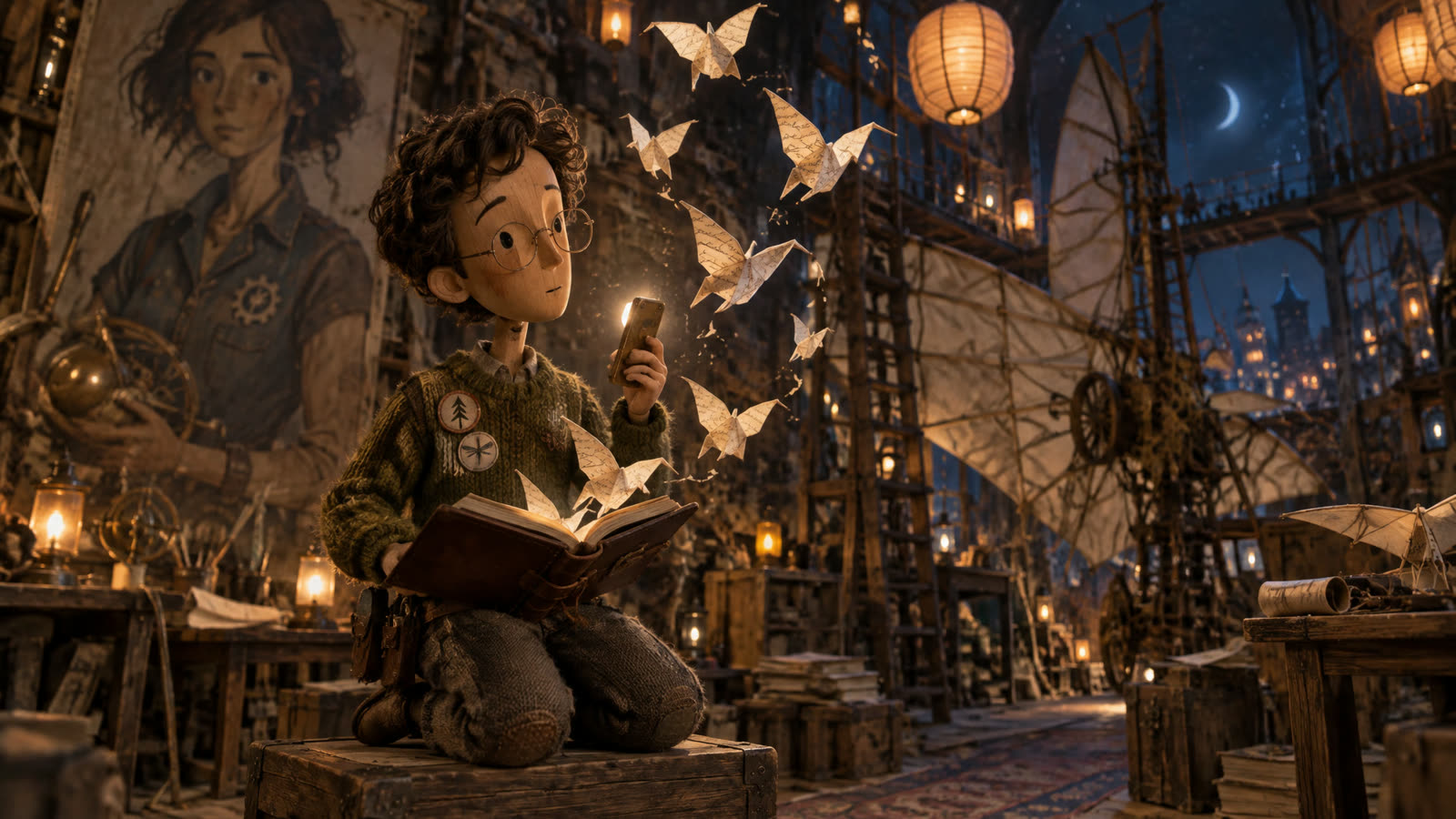
A boy's bird is oversized and can't fly straight. A dead man's pencil margins rise as a flock of forty-one small grey birds. An old woman's single bird has creases like knives, and barely moves.
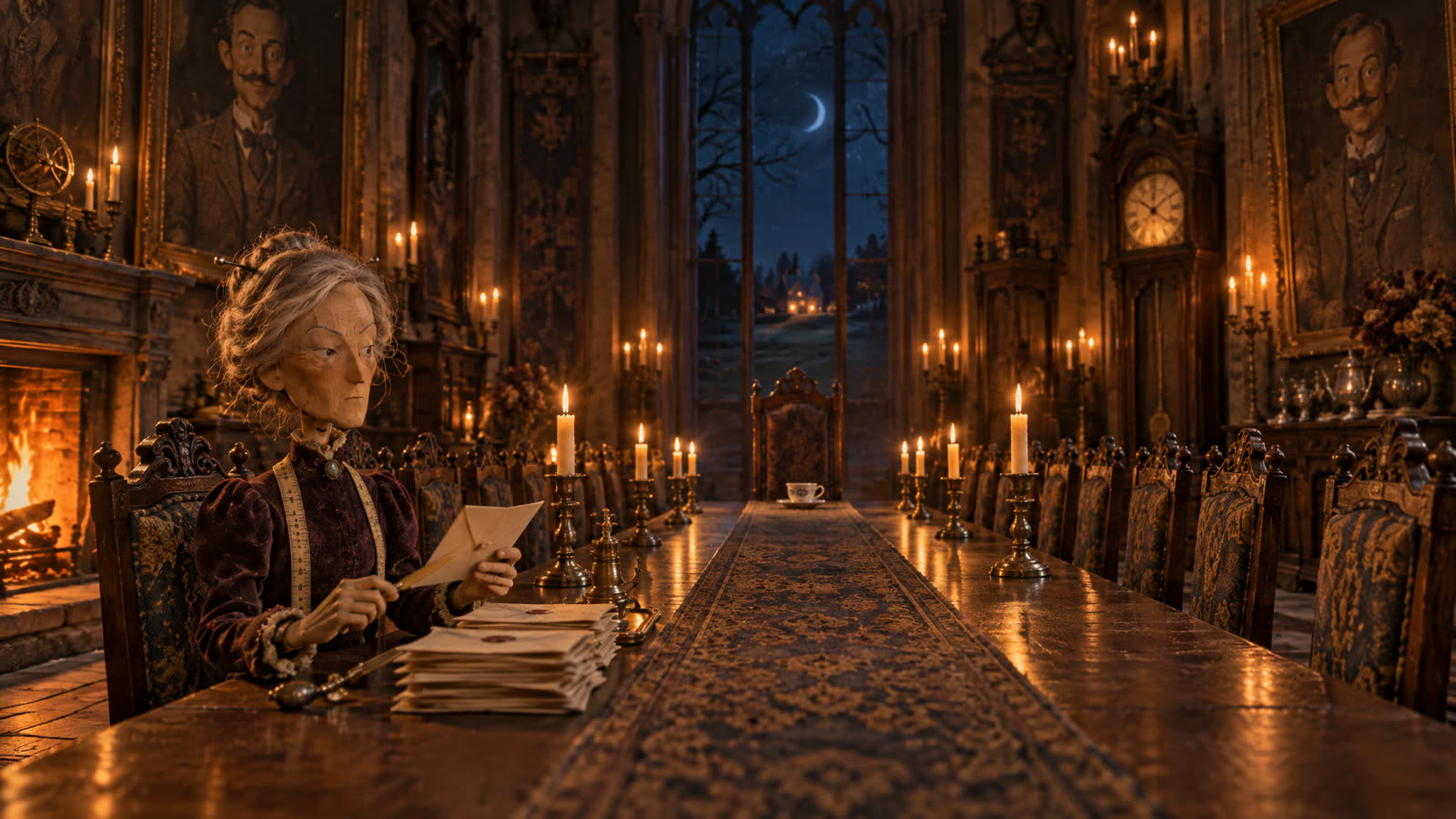
A fire, a clock that ticks too loud, a teacup set down thirty feet away. Eleanor Whitlock opens the fan mail, and one wet letter reads itself aloud.
In the film, Theo points his phone at his mother's sticky notes so he can hear them read aloud. By the finals he has renamed it Memri. Point it at handwriting, and it reads in the writer's own voice, once they've read something aloud to it.
Memri is real, and Keepsake is its origin story: an app for keeping the voices of the people who wrote to you.
memri.media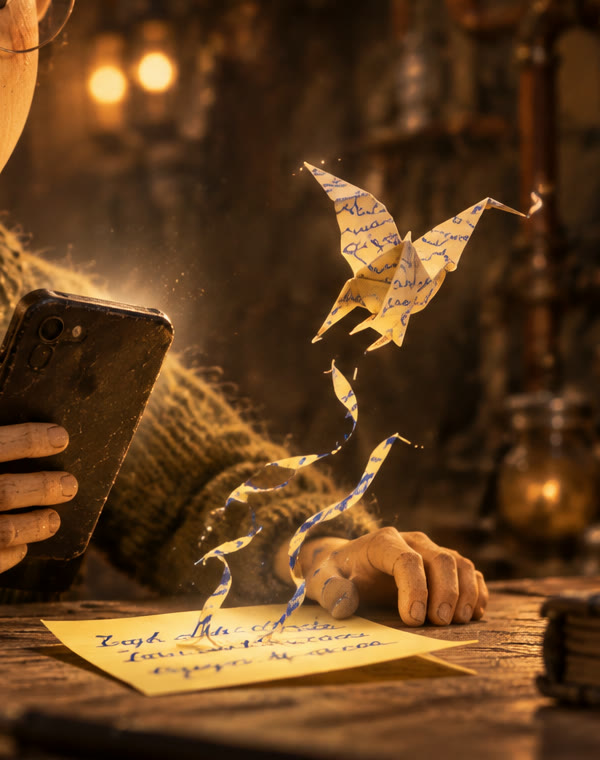
Keepsake is in development as a hybrid stop-motion short, with a human voice cast and filmed table reads planned for production. We'd love to hear from animation festival programmers, distributors and financing partners.